
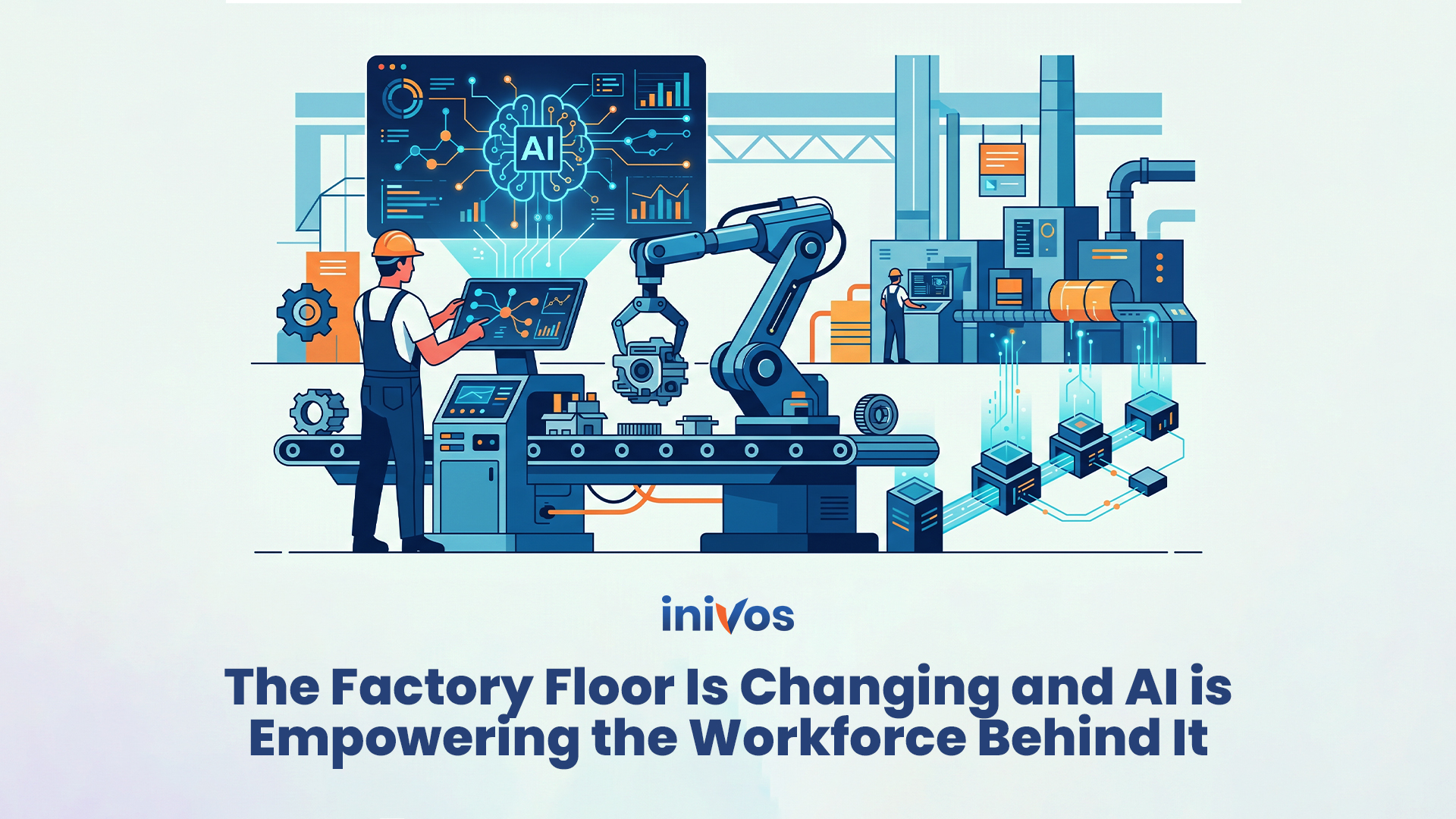
For years, conversations around AI in manufacturing focused heavily onautomation and replacing manual work. But the reality unfolding on today’sfactory floor looks very different.
Industrial AI is not replacing frontline workers, it is empowering them.
As manufacturers face growing labor shortages, rising operational complexity, and increasing pressure to improve productivity, the biggest opportunity lies in augmenting human performance. Modern AI tools help workers solve problems faster, access critical knowledge instantly, and operate with greater confidence and consistency.
The result is a smarter, more connected workforce capable of driving operational excellence in ways traditional systems never could.
The Manufacturing Workforce Challenge Is Reaching a Breaking Point
Manufacturers are operating in an increasingly difficult environment. Experienced workers are retiring, turnover rates remain high, and onboarding new employees takes longer than ever. At the same time, production environments are becoming more complex and demanding.
Traditional approaches to training and knowledge sharing are struggling to keep pace. Paper-based work instructions, manual onboarding processes, and tribal knowledge stored in the minds of experienced employees are no longer scalable.
This creates a major operational risk. When workers cannot access the right information at the right time, productivity slows, communication breaks down, and mistakes become more likely.
Industrial AI is emerging as a practical solution to these challenges by putting knowledge directly into the hands of frontline workers.
AI Is Turning Frontline Workers Into AI-Augmented Workers
The concept of the “AI-augmented worker” is quickly becoming a reality across manufacturing operations. Instead of relying on static manuals or waiting for expert assistance, workers can now access intelligent support directly within their daily workflows.
AI-powered Connected Worker platforms provide employees with instant access to work instructions, troubleshooting guidance, and operational knowledge through simple, natural interactions. Workers can ask questions in real time and receive relevant, contextual answers immediately.
This dramatically reduces downtime and enables employees to work more independently and efficiently.
Industrial AI also helps manufacturers capture tribal knowledge before it disappears. Experienced operators can convert their expertise into digital work instructions, ensuring valuable knowledge becomes accessible across the organization instead of remaining siloed within individuals.
Smarter Communication Creates Faster Operations
One of the most overlooked challenges in manufacturing is communication. Language barriers, inconsistent reporting, and fragmented shift handovers often slow operations and create misunderstandings.
Industrial AI helps eliminate these gaps through intelligent communication tools such as multilingual transcription, AI-enhanced messaging, and automated translations. Teams across shifts, plants, and regions can communicate more clearly and collaborate more effectively.
This creates a more inclusive and connected workforce while improving operational consistency across sites.
More importantly, workers spend less time searching for information or clarifying issues and more time focusing on productive work.
Industrial AI Is Delivering Measurable Business Results
The impact of Industrial AI is no longer theoretical. Manufacturers are already seeing measurable improvements across productivity, onboarding, and operational performance.
AI-powered platforms are helping organizations accelerate the creation of digital work instructions, reduce onboarding times, and improve Overall Equipment Effectiveness (OEE). Faster access to accurate information also contributes to fewer safety incidents, reduced downtime, and stronger workforce engagement.
By embedding AI directly into frontline workflows, manufacturers are creating operations that are not only more efficient but also more resilient and adaptable.
The key difference is that Industrial AI is designed to enhance human capability not remove it. Workers remain central to decision-making and problem-solving, while AI acts as a real-time support system that improves speed, confidence, and consistency.
The Future of Manufacturing Is People-Powered and AI-Enabled
Manufacturing is entering a new era where competitive advantage will increasingly depend on how effectively organizations empower their frontline workforce.
The manufacturers leading this shift are not simply investing in automation. They are investing in their people by equipping them with intelligent tools that make work safer, faster, and more connected.
Industrial AI is proving that the future of manufacturing is not about replacing human expertise. It is about unlocking its full potential.
Organizations that embrace this approach today will build stronger, smarter, and more agile operations capable of thriving in an increasingly complex industrial landscape.


.png)
